

There’s only one theater in the Tama area dedicated entirely to taishū engeki: Keyaki-za in Tachikawa. Inside, applause and soft sighs of admiration fill the air. Founded in 2015, it’s become a rare haven for this traditional art. Satomi Nakahara, who took over operations from her father Seiichirō in 2019, now runs the place.
She describes her greatest joy as watching audiences leave with a smile, saying simply, “That was fun.” Between managing her company’s various businesses, she often stops by the theater to quietly observe the performers and their fans, never losing sight of the magic that happens on stage.
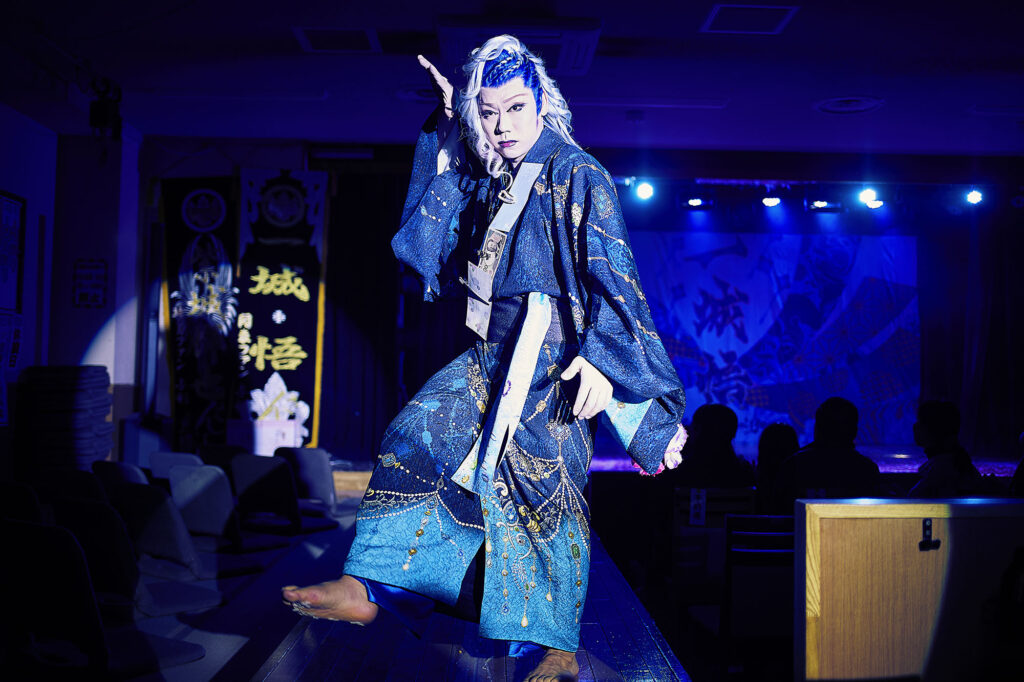
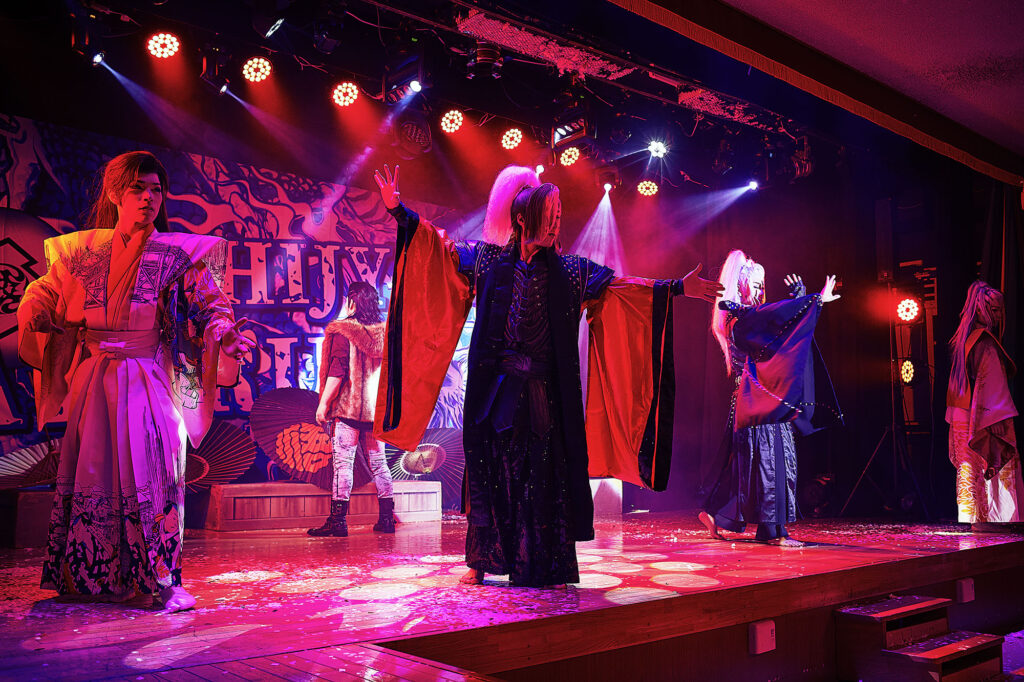
Taishū engeki is one of Japan’s traditional performance arts, alongside kabuki, noh, and kyōgen. But unlike those forms, it blends dramatic storytelling with flamboyant musical numbers and contemporary language. They keep the ticket prices affordable, making it accessible and deeply beloved by its regulars. The shows are staged twice daily, each performance lasting around three hours. What draws the crowd is a unique mix: emotionally rich period dramas, romantic tales, and over-the-top dance numbers. “The troupe leaders often say, ‘Tachikawa audiences really love the acting,’” Satomi notes. “Even when the storylines are the same, each troupe brings its own flair—and many write their own original plays. Because the dialogue is in modern Japanese, anyone can enjoy it—even if they’ve never seen it before.”
How to Enjoy Keyaki-za
First-time visitors are encouraged to clap along and gradually join in the calls and cheers from the crowd. Drinks are allowed in the theater, and guests can come and go freely—part of what makes the atmosphere so relaxed and welcoming. “Even if today’s performance isn’t quite your taste, you’re bound to find a favorite if you keep coming back.”
After each show, the cast lines up in the lobby for an okuridashi (send-off). Audiences take photos, chat with their favorite actors, and promise to return the next day. “Taishū engeki is often called the original form of oshi-katsu—the Japanese culture of supporting your favorite performers,” Satomi smiles. “It’s not unusual to see fans staying to talk through their personal struggles with the actors. That’s how close the relationship can be. For many, the theater isn’t just entertainment. It’s part of their daily life.”
Between Glitter and Grit: Life on the Road
Most taishū engeki troupes are family-run, traveling from theater to theater for month-long runs—living out of two 10-ton trucks packed with stage sets, costumes, and lighting. Children grow up on the road, switching schools with each city while learning to perform from an early age.
The 2021 film Mabuta no Tenkōsei (loosely translated as “The Transfer Student Behind the Eyelids”) captures this lifestyle through the eyes of a young performer navigating fleeting friendships and daily routines during a single month on tour. The acclaimed troupe Gekidan Mimatsu, among the top in the Kanto region, appears in the film and performed at Keyaki-za in March last year.
Satomi says. “It’s a tough life, at the end of each month, they pack up, travel, unload, and rebuild everything again. Even on their one day off, many go to help other troupes. They sleep in the theater, cook for themselves, and squeeze in a break between afternoon and evening shows.”
Unlike mainstream theater, where rehearsals can last for months, taishū engeki often operates with just a single day of practice. “If someone falls sick, they’ll rewrite the script ten minutes before curtain. The flexibility is incredible.” Some fans follow their favorite troupes across the country. “Today we had high school and college students in the audience too,” she adds.
Carrying Today’s Joy Into Tomorrow
Satomi’s father, Seiichirō, first encountered taishū engeki while managing a health spa in Fukushima. Moved by the energy and devotion of the fans, he decided to open Keyaki-za in his own building after the last taishū engeki theater in Tachikawa closed—determined to keep the culture alive. The name comes from keyaki, or zelkova tree, the official symbol of Tachikawa.
“My father used to imagine how happy people would feel coming back to the theater. I think he was also drawing from memories of the festival shows he saw as a kid—the kind where traveling troupes built temporary stages. That heat and energy are part of what makes taishū engeki so powerful. Maybe those childhood experiences led him to create this place.”
Satomi recalls a moment from 2011, when she was running the East Japan Health Spa Kappa Kingdom in Fukushima during the aftermath of the earthquake and tsunami. “We were still dealing with power outages and aftershocks, and I got a call asking, ‘Will there be a show tomorrow?’ I was surprised—but for some guests, the theater had become a lifeline. Back then, before social media, everyone was worried about the regulars and hoping they were okay.”
“Some of the kids who came with their grandparents back then are now college students. One of them came all the way from Fukushima to see us here in Tachikawa, just because they wanted to. Watching the performers grow is a joy—but so is seeing the audience grow with them.”
A Brief History of Taishū Engeki
Taishū engeki (Japanese Pop Theatre) likely traces its roots to traveling troupes in the Edo period. Among these, some gained official patronage from the shogunate and developed into kabuki, while others remained independent and evolved into taishū engeki—popular theater for the general public—after the Meiji era. One theory holds that taishū engeki began as a space for women excluded from kabuki, though most performers today are men.
In the 1940s, Tokyo had around 50 such theaters. But with the rise of television and movies after the war, many became cinemas or strip clubs. Today, only three dedicated taishū engeki theaters remain in the city: Tachikawa Keyaki-za, Shinohara Entertainment Hall in Jūjō, and Asakusa Mokubakan.
Satomi Nakahara, President of Goko Construction Co., Ltd. and Tachikawa Keyaki-za Theater
Based in Akiruno City, Satomi oversees real estate, construction, hospitality, and property management. From 2006 to 2018, she ran the East Japan Health Spa Kappa Kingdom in Date City, Fukushima, and also organized taishū engeki performances. She became president of her family business, Goko Construction Co., Ltd., in 2019.
About Tachikawa
Tachikawa is known for its history as the site of a U.S. military base, which brought significant changes to the area, spurring infrastructure development and economic growth after the war. After the base was later returned to Japan, Tachikawa actively engaged in urban redevelopment. Today, Tachikawa flourishes as the gateway to Tama. As a tourist destination, Tachikawa is home to the Showa Commemorative National Park and has recently gained popularity as a mecca for anime and manga fans.
こちらの記事は英語で執筆されており、ブラウザの自動翻訳により名前の漢字表記が正しく表示されないこと、不自然な日本語が表示されることがあるようです。お手数ですが、英語原文での閲覧をお試しください。