
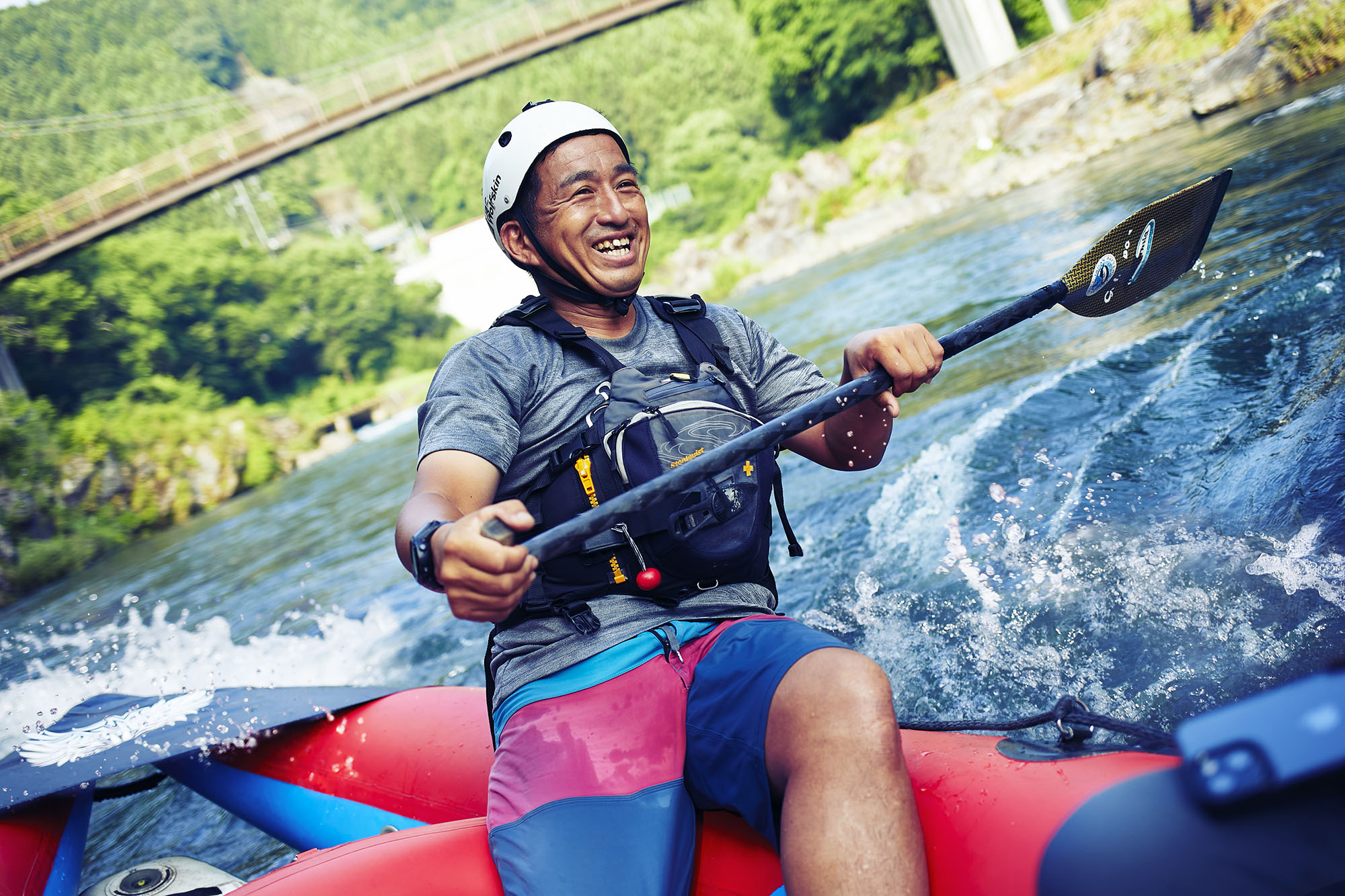
When people think of rivers flowing through Tokyo, the two names that usually come to mind are the Tama River and the Sumida River. The Sumida River, in particular, brings to mind fireworks, festivals, and yakatabune boats. These scenes are intricately tied to the nostalgia of the city. Yet within the same Tokyo, there is a place where time seems to move differently. That place is the Mitake Gorge along the Tama River.
Around Mitake Gorge, listed among Japan’s Selected 100 Exquisite and Well-Conserved Waters, hiking trails, climbing routes, canoeing, and rafting sit alongside cultural landmarks such as the Gyokudo Kawai Museum and Ozawa, Tokyo’s oldest sake brewery. The balance between nature and daily life is part of what defines Mitake.
Running a rafting club in Mitake is Daigo Shibata, a former world-class rafting athlete. Now based in Mitake Gorge, he leads a weekly river cleanup every Monday, picking up trash along the Tama River. He is also one of the people who has introduced the outdoor ethic known as Leave No Trace (LNT) through practice rather than theory. LNT is not about making one’s impact on nature zero, but about sharing an attitude of reducing that impact as much as possible. On the Tama River in Mitake, this idea is not treated as an abstract principle, but continues quietly as part of everyday action.
The Desire to Build a Community Around the Rafting Experience
What Daigo hopes to offer through rafting is not merely thrill or enjoyment. He cares about the quality of the experience itself, and about whether the time spent on the river leaves a memorable impression behind with the participants. For that reason, he has always felt that he must think not only as a guide, but also as a planner, constantly considering how the experience is shaped and can be improved.
In rafting, the boat moves forward only when everyone’s movements come together. Sometimes a quiet person suddenly raises their voice to guide the team, and those moments, Daigo says, reveal the true fascination of the sport.
Through his twenties and early thirties, he lived as a competitive athlete. At the World Rafting Championship in Bosnia and Herzegovina, the final race of his career, his team achieved its best result, finishing second overall. Yet what stayed with him was not the ranking, but the realization that even people who share the same goal never think in exactly the same way.
On more dangerous rivers, cooperation can mean survival. In Japan’s gentler rivers, racing gives that same tension a form, setting a start and a finish that forces each person to confront their role. For Daigo, those experiences showed that rafting is not only about winning, but about learning how people work together.
After retiring in 2009, his interest gradually shifted from competing himself to creating places where others could share that experience.
From Outsider to Insider: Immersing in a Local Community
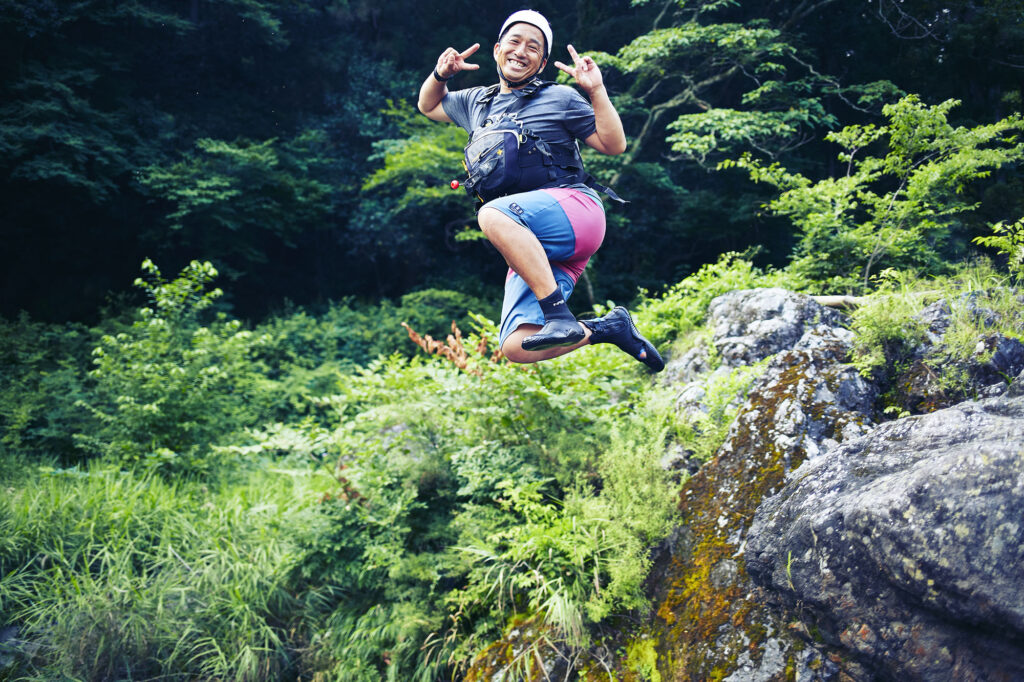
The following year, Daigo moved from Kanagawa to Mitake Gorge in Ome, where a community of rafting and canoe athletes was already based. At the time, he was still focused entirely on competition, running faster rivers and paddling rapids he had never experienced before, with little interest in the local community. But as he began building his work around the river, he realized that his original views no longer held. “The river belongs to everyone. If you want to continue working on it, you can’t stay separate from the community.”
The realization he had felt in competition, that people never think in exactly the same way, confronted him again here. Coming from outside and making a living on the river, he often wondered how his presence was being received. The turning point came in the winter of 2014, when heavy snow brought the area to a halt. He spent days shoveling snow alongside local residents, and hearing their thanks made him feel, for the first time, that it was all right for him to be there.
From then on, his relationship with the community grew steadily. The Mitake Cup, a river sports competition he has organized since 2009, gradually came to involve local residents as staff, and he learned that nothing can take place without trust. Even simple things, like securing parking, depended on cooperation. Through his work, he also built connections with the city administration and emergency services, relationships that eventually became the foundation of his work.
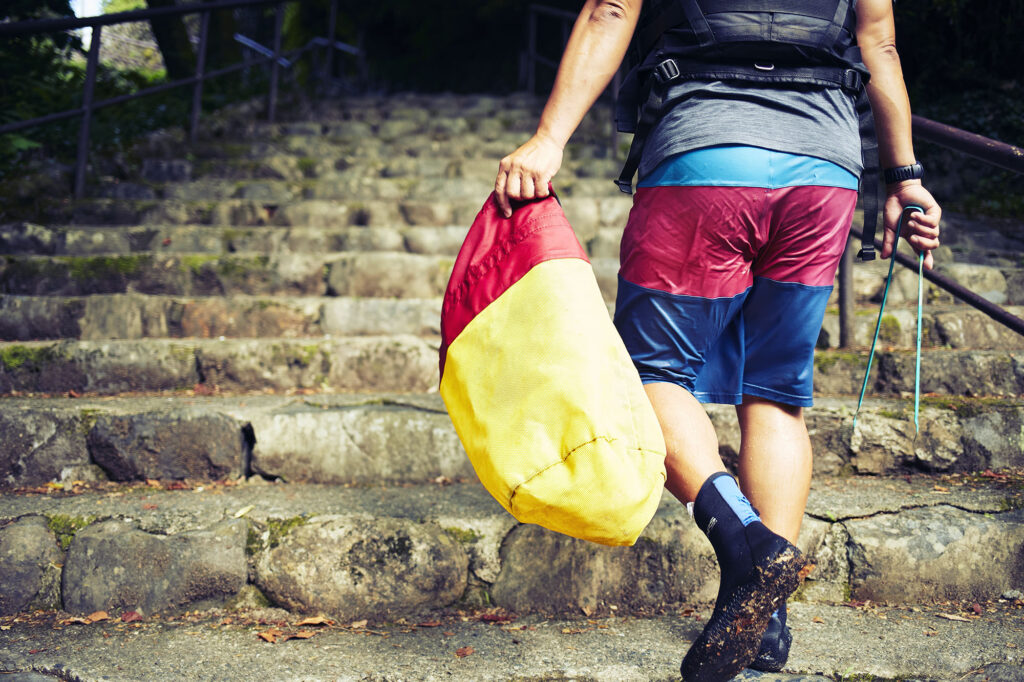
In 2019, Typhoon Hagibis pushed that relationship even further. Working with local authorities, rescue teams, and residents, he helped clear debris and prepare for water rescues. Through that experience, the river changed in meaning, from a place to use into a place that also had to be protected.
In the aftermath, the cleanup efforts brought even more people together. Over two days, three hundred volunteers gathered, many meeting for the first time, yet naturally forming connections as they admire and care about the same river. “When people come together and move together, relationships form in ways you don’t expect. That made me happier than anything.”
He did not want that experience to end as a one-time event, so he created the Ome River Clean Marathon. Teams raft about fifteen kilometers (nine miles) down the Tama River while picking up trash along the way, competing by the total weight they collect. By turning cleanup into something people could enjoy, the event drew attention and participation grew each year. Over eleven events, nearly eleven tons of trash have been collected, and for many participants it was their first time experiencing the river in this way.
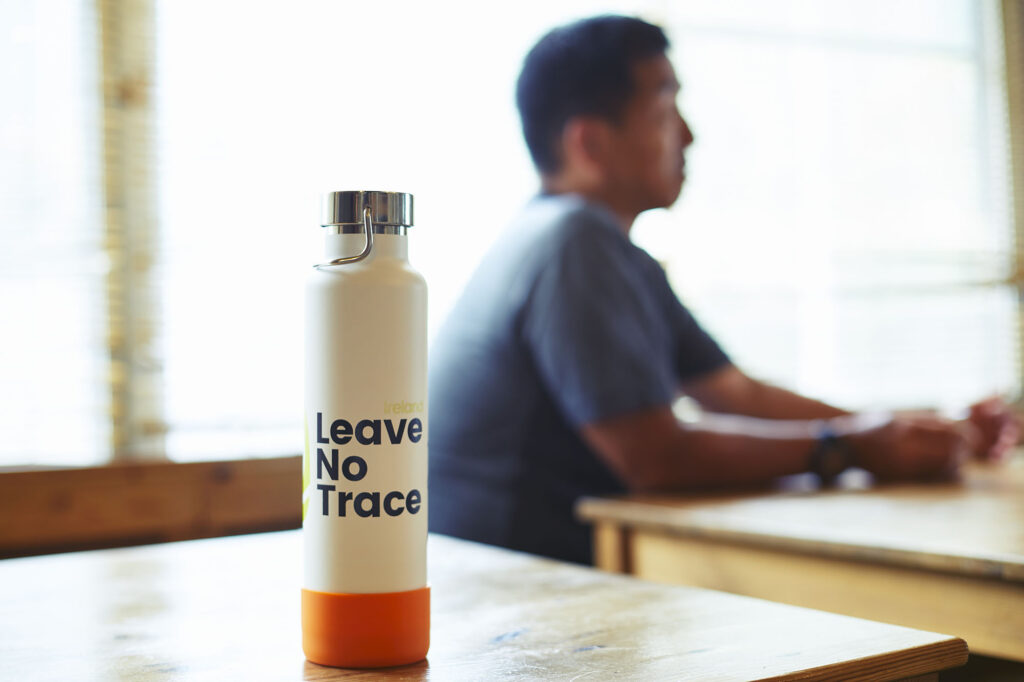
These efforts became the starting point for what is now known as River Clean, an initiative that continues today. As the activity grew, the philosophy of Leave No Trace (LNT) became one of its guiding ideas. Rather than simply picking up trash, the goal is to help people enjoy the river first, then leave it a little better than before. “The important thing is to enjoy it first,” Daigo says. “As we walk along the river, we call out ‘Nice pick’ whenever someone picks something up.” For him, the key is not to aim for perfection, but to stay connected to the river in a way that can continue over time.
Inspiring People to Deepen Their Appreciation for the River
Even the most careful outdoor activities leave some impact on nature. Still, there is a mindset that tries to minimize it. Daigo says the first step is simply to come to like the place itself. Without a fun, comfortable experience that makes you want to return, the desire to protect it won’t naturally arise.
Being on the river is more than being in nature. You trust the current, call out to companions, and sometimes push yourself to keep up. In those moments, relationships form, and that’s where Daigo finds the real value of being on the river.
Trash can quickly spoil that experience. People expect clean nature, and a single piece of litter can take that away. LNT shows the actual time waste takes to decompose—it’s about understanding the facts, not imagining invisible harm. Picking up trash isn’t heroic; it’s a natural part of enjoying and caring for the river. First, enjoy the place. Then, leave it a little cleaner than you found it.
Later, something his business partner Shoko once said stayed with us. “People today think too much.” Out on the river, you have no choice but to focus on the current in front of you and on the movements of the people around you. That time, she says, naturally quiets the mind. You move your body, raise your voice, and laugh. Whether that time is called healing or learning is left to each person who has made their way down the river.
Daigo Shibata, Founder, Mitake Race Rafting Club and Rafting planner
Daigo became a professional athlete in 2004. He placed third overall at the 2008 World Rafting Championship and finished as the overall runner-up at the 2009 World Rafting Championship. After retiring from competition in June 2009, he began working as a rafting planner. He continues to play an active role in raising the competitive level of rafting in Japan by organizing paddling competitions nationwide, including the Mitake Cup.
About Ome
Once home to nearly 800 weavers and dyers, Ome flourished in its rich natural surroundings, cultivating a deep tradition of craftsmanship, sake brewing, and the arts. Much like indigo fabric that deepens with each layer of dye, the town’s cultural heritage has grown ever richer over time. At the heart of this legacy stands Yoshino Baigo, a massive treasured plum blossom grove where each spring, thousands of trees blanket the hillsides in delicate shades of pink and white. This grove was lovingly restored by the local community to symbolize enduring beauty and to renew and revive a spirit that lives on.
こちらの記事は英語で執筆されており、ブラウザの自動翻訳により氏名の漢字表記が正しく表示されないこと、不自然な日本語が表示されることがあるようです。お手数ですが、英語原文での閲覧をお試しください。