
“Tokyo makes sake?” Even many Japanese who live outside the capital ask this question in disbelief. For international visitors, the surprise is even greater. Tokyo is often imagined as a city of relentless motion—Shibuya’s crossings, Asakusa’s crowds, Ginza’s polished storefronts. Yet beyond this urban clamor, the Tama region offers another face of Tokyo, where clear rivers run through forested valleys and daily life unfolds at a gentler pace.
Tama is a place where nature remains close. Traditional inns and hot springs sit alongside lively local taverns, and the rhythms of the land quietly shape the lives of those who live here. Of Tokyo’s ten remaining sake breweries, nine are located in this region. Among them, the oldest is Ozawa Brewery in Ome, founded in 1702. Known for its flagship sake Sawanoi, whose label features a freshwater crab that can only survive in pristine water, Ozawa Brewery is often referred to as Tokyo’s leading sake producer. The name Sawanoi itself comes from Sawai, the area where the brewery stands, long valued for its pure and abundant spring water.

Japanese sake has gained global recognition in recent years. Yet the philosophies of its makers, and the way sake is woven into Japanese life and culture, remain less understood. Historically, sake has been indispensable at weddings and funerals, seasonal festivals, shrine rituals, and intimate family milestones. Brewing sake is not merely a matter of fermentation science; it is an artisanal practice shaped by rice, water, climate, and place. The techniques and wisdom handed down through generations continue to sustain sake today.
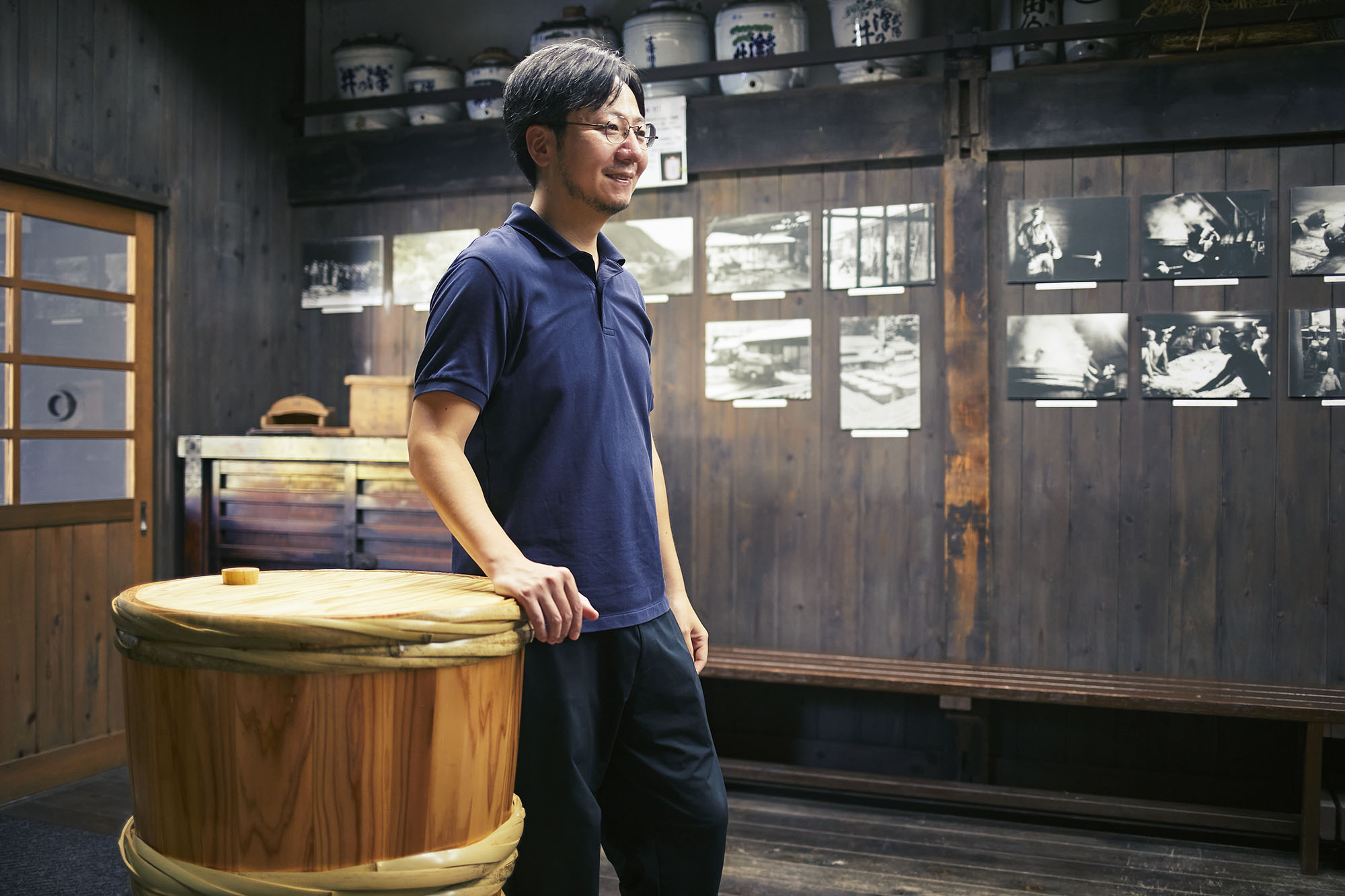
Paradoxically, these deeply rooted cultural foundations feel distant not only to overseas enthusiasts, but also to many contemporary Japanese. With these thoughts in mind, we spoke with Mikio Ozawa, the 23rd-generation head of Ozawa Brewery. The conversation ranged widely—from the realities facing the sake industry today to the irreplaceable moments he has experienced through brewing.
Experience the Soul of Japanese Sake at Ozawa Brewery in Tama
——Ozawa Brewery long offered free brewery tours, but recently transitioned to a paid system. We hear that more breweries nationwide are either discontinuing tours or charging for them. What made free tours possible before?
Mikio Ozawa (MO): It was a difficult decision, but I believe the change was inevitable. In the past, group bus tours were common. Breweries were included as stops along sightseeing routes, so offering free tours made sense—we could offset costs through souvenir sales. Today, group tourism has declined, and individual travelers have become the norm. Rather than welcoming people who come simply because it’s free, we chose to become a place that people want to visit because they’re genuinely interested—one worth paying for. It’s about increasing the value of the experience itself.
The industry as a whole is at a turning point. The history and culture we carry deserve proper recognition; otherwise, it becomes impossible to sustain sake brewing as a business. In reality, around 80 percent of breweries are operating at a loss. Only the top 20 percent are profitable. Many are barely staying afloat.
There is a wide gap between the romantic image people have of sake and the actual conditions of its production. We need to narrow that gap. Unless the public’s admiration is brought closer to our real circumstances, sake brewing cannot truly be passed on as a viable craft.

——When developing new sake, how do your ideas take shape?
MO: It starts with organizing direction in my own mind. I create presentation materials for myself—budget, pricing, market, target audience, and product concept. By articulating these elements out loud, my thoughts naturally become clearer.
We consider changes in the times. For example, lighter styles to match diversified diets, or richer profiles designed to pair with international cuisines. We test, listen to feedback from customers and distributors, and then decide whether to continue. Once we commit, we’re producing thousands, sometimes tens of thousands of bottles. There’s always a sense of risk. Fortunately, our toji (master brewer) is highly skilled, which gives me confidence.
——In a diversified society, this evolution may be rational. Yet flavors are said to be shifting toward “easy-to-understand” and “inoffensive” profiles. In France, for example, young people are reportedly avoiding strong-smelling, traditionally aged cheeses. A similar trend seems to exist in sake.
MO: Both Japanese and international consumers show a strong preference for premium sake—particularly fragrant, sweet junmai daiginjo. It’s easy to understand why: the appeal is immediate and intuitive. However, this trend suggests that modern palates may be leaning toward surface-level clarity, with fewer opportunities to engage deeply with complex flavors. There’s also a tendency to rely on straightforward sensory pleasures like sweetness or saltiness.
Taste, however, is cultivated through experience. What one finds difficult today may become deeply rewarding over time. Sake with pronounced acidity or distinctive character is often dismissed as “hard to drink,” yet these are frequently the bottles with the most personality and depth. In fact, simpler junmai sake can be more complex and layered. It can be enjoyed at room temperature, never becomes tiring, and reveals greater depth with each sip. These are the kinds of sake that quietly endure.

——Ozawa Brewery has received awards both in Japan and overseas. Do evaluation criteria differ between domestic and international competitions?
MO: In Japan, competitions are largely based on a deduction system. Sake with fewer flaws, such as bitterness, off-notes, or imbalance, scores highly. In other words, they reward an unblemished beauty. International competitions, on the other hand, use an additive system. Starting from a baseline, judges evaluate how much individuality and completeness a sake can build upon it. Aroma, flavor character, and a memorable finish are assessed positively. The maker’s expression becomes part of the score. That difference is significant. In Japan, perfection is achieved through subtraction; overseas, through the refinement of individuality. Of course, flawlessness is the baseline everywhere. Clean aroma, no harsh bitterness, and a polished finish are essential. Beyond that, balance becomes the deciding factor.
Our sake is not simply light and clean. It carries acidity and umami, giving it a clear sense of presence. That is where its character lies, and also where the difficulty lies. The deeper the flavor, the harder it is to maintain balance. Still, we aim for a line where sake is flavorful, clean, and genuinely delicious. Not overly flashy, not too restrained. A sake that naturally invites the next sip. True character, to us, resides not in loud individuality, but in quiet harmony.
Life with Sake at Ozawa Brewery in Tokyo
——How do you view evolution while preserving tradition?
MO: Tradition and innovation need balance. I find it helpful to clearly define what should remain unchanged and what can evolve. For example, our respect for rice and water is non-negotiable and will never change. But how we present sake, or how people encounter it, should evolve with the times. Drawing that line makes things clearer. Preserving tradition is not the goal in itself. It is a means of carrying the brewery into the future. What matters is not freezing history as it was, but continuously refining what “now” looks like. With respect for our predecessors, my role is to improve precision and relevance for this era. That, to me, is how my generation contributes. Many younger brewery owners choose to completely renew their brands. I understand that impulse, but I also genuinely like what already exists here. Change itself is not a bad thing, but transforming something so completely that it can never return to its essence feels wrong. You need to know what you truly value before you decide what to change.
In that sense, the sake that most embodies Ozawa Brewery is kimoto. It requires time, patience, and labor, but by relying on natural forces to cultivate yeast, the process directly reflects the brewery’s climate, environment, and the sensibilities of its makers. When I taste it, I think, “Yes, this is our flavor.”

——Sake has long accompanied the lives of Japanese people, sharing moments of joy and sorrow. Have you ever felt the depth of that connection personally?
MO: One day, we received a message from someone who wished to purchase sake for a deceased family member. They wanted to offer the bottle at the grave, the sake their loved one had always enjoyed. Later, the family reached out again to thank us. They told us that the person who had passed away used to fondly recall a chance encounter they once had with me at a restaurant. Hearing that filled my heart with warmth.
If we were making something else, would we be able to be involved in people’s lives in this way? Probably not. That moment made me deeply aware of the weight and responsibility of brewing sake, as well as the quiet joy of creating something that can stand beside a person throughout their life.
Note1: Kimoto is one of the most time-intensive and demanding brewing methods in sake production. Unlike the modern sokujo method, which adds lactic acid to quickly stabilize fermentation, kimoto relies entirely on natural processes. The air of the brewery, its water, wooden tools, and the microorganisms living within them—all elements of the brewery’s ecosystem—become central characters in the brewing process.
Mikio Ozawa, President, Ozawa Brewery Co., Ltd.
Mikio Ozawa is the 23rd-generation head of Ozawa Brewery, a sake producer founded in 1702 in Ome, western Tokyo. Surrounded by the brewery and its natural environment from an early age, he grew up with sake as part of everyday life. He assumed the role of president in 2019. The brewery grounds are open to visitors. They include Sawanoi-en for casual dining and local products, a sake tasting counter, the restaurants Mamagotoya and Mameraku, where tofu and yuba are made with the same spring water used in brewing, and Café Shizuku, known for its coffee brewed with that water. In 2021, Sawanoi Junmai Daiginjo received the President’s Prize at Kura Master, an international sake competition held in Paris.
About Ome
Once home to nearly 800 weavers and dyers, Ome flourished in its rich natural surroundings, cultivating a deep tradition of craftsmanship, sake brewing, and the arts. Much like indigo fabric that deepens with each layer of dye, the town’s cultural heritage has grown ever richer over time. At the heart of this legacy stands Yoshino Baigo, a massive treasured plum blossom grove where each spring, thousands of trees blanket the hillsides in delicate shades of pink and white. This grove was lovingly restored by the local community to symbolize enduring beauty and to renew and revive a spirit that lives on.
こちらの記事は英語で執筆されており、ブラウザの自動翻訳により氏名の漢字表記が正しく表示されないこと、不自然な日本語が表示されることがあるようです。お手数ですが、英語原文での閲覧をお試しください。