
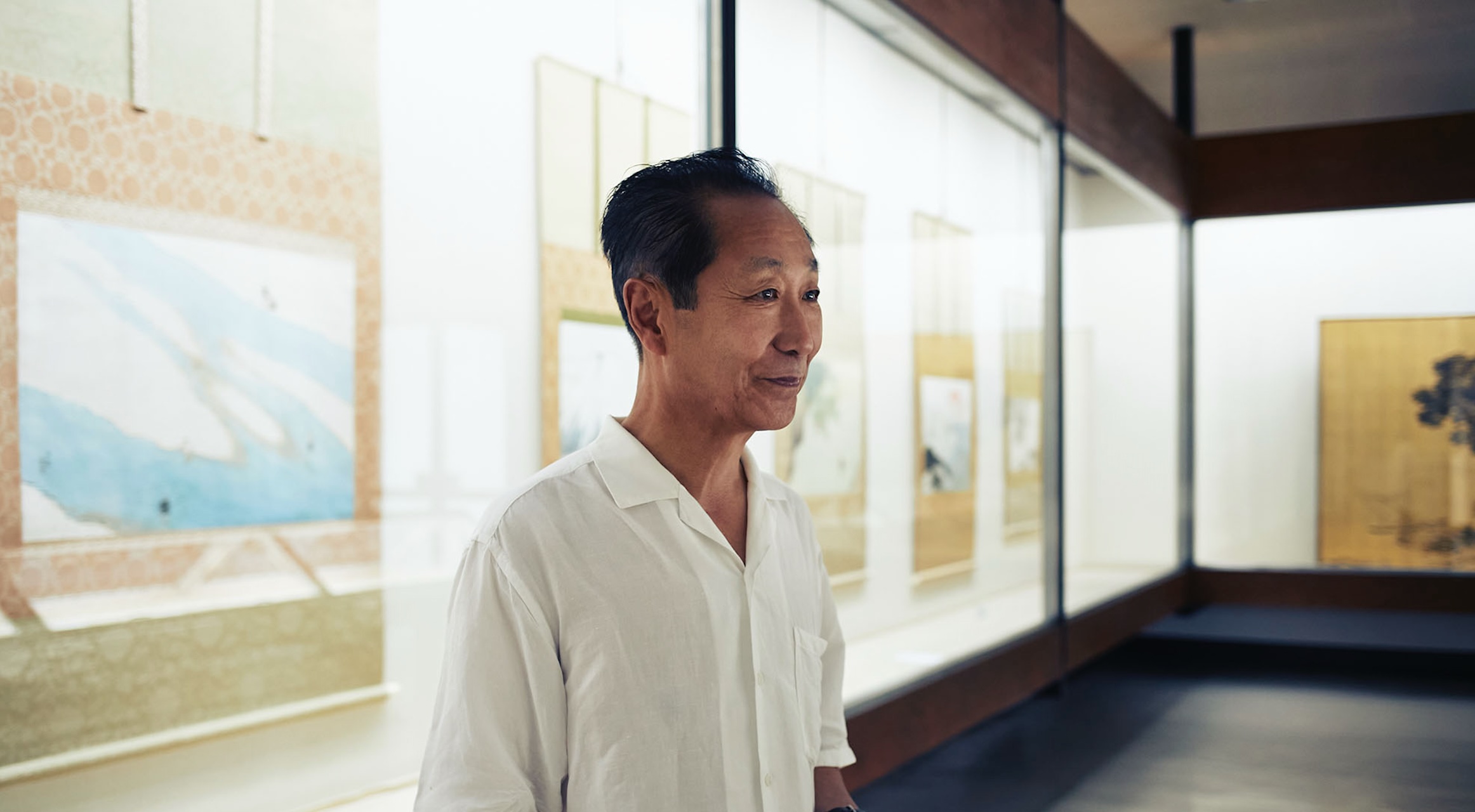
Nestled in the serene hills of Mitake, Ome City, the Gyokudō Kawai Museum gazes upon the crystal-clear Tamagawa River. Here, the rhythms of the seasons paint the landscape in gentle brushstrokes: the soft light of spring, the dense greenery of summer, the fiery reds of autumn, and the quiet snow-laden vistas of winter. It was in this tranquil setting that Gyokudō Kawai (1873–1957), a master of modern Japanese painting, devoted his later years to capturing the subtleties of life and nature. Stepping into his world, one is immediately drawn into a realm where the sensibilities of Japanese beauty breathe in every corner.
Art critics of Japanese painting note that Gyokudō’s landscapes transcend mere depictions of nature. Rather than the dramatic heights of rugged mountains, his gaze lingers on the warmth of everyday life intertwined with nature. Through a process of careful observation and selective reconstruction, he created an “idealized nature” that evokes nostalgia in the hearts of all Japanese viewers. The babble of streams, the trees glistening in morning light, and the gentle integration of human activity into the landscape all invite a quiet appreciation of harmonious coexistence.
Junichiro Ozawa, the museum’s director, describes both the museum and its gardens as a living embodiment of Gyokudō’s world—like stepping into one of his paintings. As the 22nd-generation head of the Ozawa Sake Brewery, established in 1702, Junichiro bridges the worlds of art, nature, and sake. When asked about the relationship between Gyokudō’s work and the Mitake landscape, his reflections weave seamlessly from aesthetics to philosophy, touching on the ways in which life, nature, and craftsmanship inform one another.
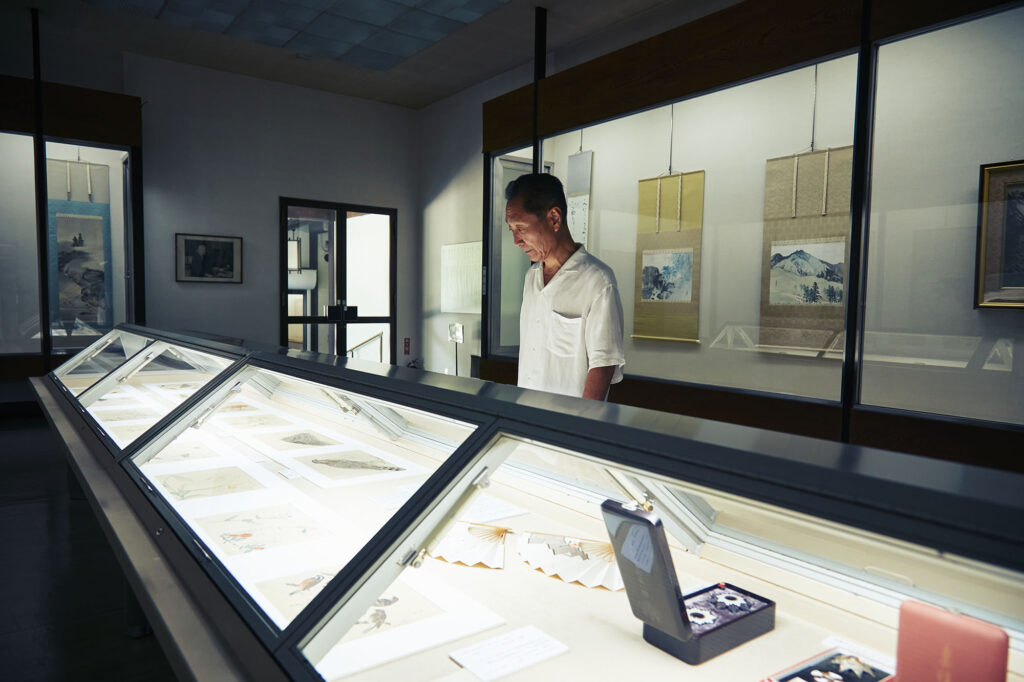
The Gyokudō Kawai Museum was established in 1961, four years after Gyokudō’s passing, through the generous contributions of local supporters, patrons from across Japan, and even Her Majesty the Empress. Its karesansui, or dry landscape garden, has earned international acclaim, ranking fifth in the 2019 Japanese Garden Awards by the US-based Sukiya Living magazine (formerly Journal of Japanese Gardening. The garden’s refined elegance and subtle artistry continue to captivate visitors from around the world.
Ome, Tokyo Travel: Gyokudō’s Art and the Murmuring River of Nature
——Among the works in this museum, which ones leave the deepest impression?
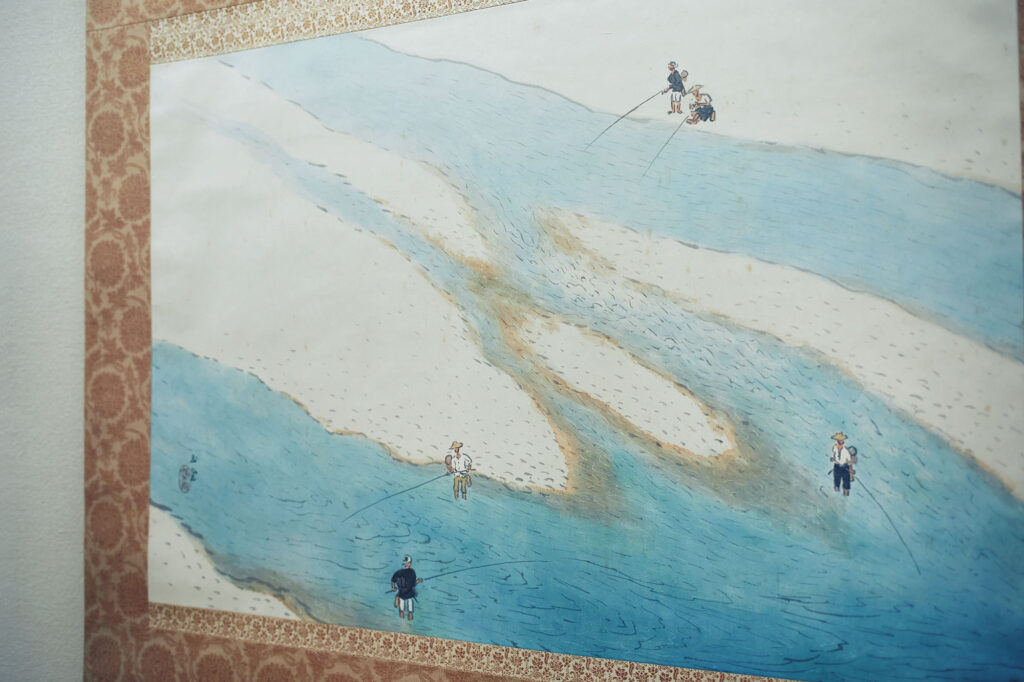
Junichiro Ozawa (JO): I have a particular fondness for Natsukawa (夏川、Summer River). There are very few paintings that can evoke such a profound sense of coolness and serenity. It is not merely a matter of personal preference; it embodies a quintessentially Japanese sense of beauty.
Another work I hold dear is Oshidori (Mandarin Ducks). The pair of ducks conveys the warmth and affection between two lifelong partners—not only through skillful brushwork, but through a tenderness that seems to reveal their hearts.
——You have also spoken about the importance of appreciating empty space in Japanese painting.
JO: Japanese painting embraces the concept of aerial perspective. What appears as blank or empty space is never truly void; it contains presence, suggestion, and depth. Even the unpainted spaces expand the world within the frame. This sensibility lies at the heart of Japanese aesthetics.
It becomes even more compelling when you imagine the intended placement of each work. The pieces in this collection were not created merely for display in a museum; they were painted for specific spaces. A large, elaborately detailed painting might have been hung in a grand tokonoma (an alcove in a Japanese reception room for displaying art or flowers) to welcome guests, while a smaller, more austere work was meant to be quietly appreciated in daily life. Each painting, in essence, shapes the space it inhabits.
——Gyokudō’s works are often noted for the way they immerse human life within the natural world. One of his masterpieces, Passing Spring (1916), housed in the National Museum of Modern Art, Tokyo, portrays the poetic harmony between nature’s many expressions and the everyday lives of people in Nagatoro. Nagatoro is a scenic riverside town in the Chichibu region of Saitama Prefecture. Through this work, he captured the rich emotional landscape where humanity and nature quietly coexist.
JO: What feels a little bittersweet to me is that Gyokudō painted the landscapes of Showa-era (1603~1868) Japan. His works breathe with the emotions and everyday lives unique to that time, yet for younger generations today, such scenes may seem somewhat distant. When viewing them, you can’t help but think, “So this is what Japan must have looked like back then,” and feel a nostalgia that transcends time.
If Gyokudō had created more works with a universality that speaks directly to us today, perhaps they would have resonated with an even broader audience. The sentiment of nature changes with the times, and even when looking at the same scenery, our emotional response shifts.
In Natsukawa, for example, the fishermen are dressed in the attire and carry the rods typical of the Shōwa-era. The boats depicted—sturdy wooden vessels rarely seen today—reflect a world long past. Through such intricate details, we can sense the atmosphere of that era: the rhythm of daily life, the intimacy between people and nature, and the quiet coexistence that once defined Japanese life.
——I’ve heard that Gyokudō’s compositions are also remarkably original.
JO: Indeed. Patrons typically requested landscapes of mountains or valleys. Summer River, with its unusual composition, was Gyokudō’s own exploration: he sought to create something fresh, to present a vision that clients could never have imagined. It is a work that challenges expectations, inviting viewers into an unforeseen world.
——How does commissioned work differ from what he wished to paint?
JO: Completely different. Most artists work to fulfill commissions, but Gyokudō’s approach was distinct. Even in venues like the Nitten—the Japan Fine Arts Exhibition, the most prestigious national art exhibition in the country— he continuously experimented, testing how new expressions would be received. He relished the tension of presenting innovative ideas to the world, and that attitude is what makes engaging with his paintings so rewarding.
Savoring the Seasons: The Subtle Flow of Time in Ome
——Could you tell us about the seasonal pleasures of the museum’s garden?
JO: We wanted people to come and enjoy the area. At one point, our sake brewery website published a landscape photograph on the first of every month. At first glance, the scenery seemed unchanged; the photos were not particularly exciting. Yet, on closer observation, a fascinating discovery emerged. The landscape, though appearing static, subtly shifted over time, like a series of frames in a film.
Day by day, month by month, the changes were almost imperceptible. Yet come April, the fresh greenery bursts forth with remarkable intensity, and by August, the leaves shine with vibrant life. These seasonal shifts occur roughly four times a year, creating moments of profound transformation.
Observing these changes fosters a quiet delight in the unfolding of time. Even when we think we are simply watching the world pass by, the scenery is in constant flux. One day, without expecting it, we notice a subtle difference. There is a deep satisfaction in realizing that by being present in this moment, we share in these subtle transformations.
——Do you practice painting yourself?
JO: I studied sumi-e ink painting. I imagined it would be fun, and sumi-e seemed like the easiest place to start—but it was actually more challenging than I expected. My teacher emphasized mastering brush technique first. Only after perfecting the fundamentals could one’s own sensibility and personality manifest in the work.
The practice was rigorous. Horizontal lines repeated endlessly, followed by vertical lines, then circles. The ink must flow evenly across the paper; any hesitation affects the vitality of the line. Drawing a thirty-centimeter line requires exactly the right amount of ink for its full length. Only after such meticulous preparation does one attempt something representational, like a flower in a vase. The process is long and exacting, but it is through this discipline that the art truly comes alive.
——While explaining Gyokudō’s works, you once remarked that success in life depends on three elements: talent, effort, and luck—and that when each reaches a perfect score of ten, one approaches an ideal state of fulfillment. In contemporary terms, you likened this balance to Shohei Ohtani, whose talent, effort, and fortune each seem to be near perfect, bringing him remarkably close to that ideal score of thirty.
JO: In baseball or the arts, things are quite clear-cut, because these worlds demand a lifelong dedication to a single pursuit. That’s why it’s easy to think in terms of talent, effort, and luck—each needing to be nearly perfect to achieve success.
But for most people in society, myself included, life requires us to take on many different roles and responsibilities. In that case, those three elements alone aren’t enough—we have to discover and nurture smaller, more subtle abilities within ourselves. Still, in a field like art or baseball, where one devotes everything to a single craft, the boundaries between these factors become very distinct. I believe Shohei Ohtani managed to step up during the pandemic precisely because fortune was on his side.
When I look at Gyokudō’s paintings, I sense not only his tireless effort but also the presence of luck—something beyond human control—that guided his creative path. Talent, meanwhile, reveals itself in both technique and sensibility, and Natsukawa stands as a quintessential example of where his artistic gift shines at its absolute peak.
The Philosophy of the Moment: Japanese Painting and the Spirit of Sake
——As both the museum director and the 22nd-generation head of Ozawa Sake Brewery, can you share the challenges of succession and your approach as a business leader?
JO: I recently attended a lecture in which the speaker stressed that merely dreaming is not enough; you also need to translate those dreams into a concrete, realistic plan. When I took over the family business from my father in my thirties, I faced exactly this challenge. The transition from parent to child is always the most difficult period. Employees watch closely, questioning whether the new leader can be trusted, while the former leader may still be involved. In that environment, I learned the importance of putting goals down on paper.
I set myself an ambitious objective: to make our brewery the most highly regarded in Tokyo. Then I carefully outlined the steps required to achieve it. Seeing the plan spread out before me, I could approach each step systematically, confident that by following the map calmly and methodically, the vision could be realized.
——Is there another element besides talent, effort, and luck that factors into success?
JO: Perhaps intelligence plays a role as well. My younger brother shared an interesting story: when Gyokudō fell ill, he gave a painting, Defune (Departure of the Boat), to the doctor who cared for him. Defune is considered Gyokudō’s final work, but in fact, there are two original paintings of the same subject. One remains with our family, and the other is with the doctor’s family — which is believed to be the true final Defune he painted.
By analyzing the seals and brushwork, my brother determined the order in which the two were created. During that time, Gyokudō had been seriously ill and spent several months in bed, with rumors spreading that his career had come to an end. Yet after his recovery, he went on to create a number of outstanding works.
According to my brother’s observation, Gyokudō must have reasoned that he could not allow people to think his creative life was over — and so, with deliberate resolve, he set out to overturn that perception through a fresh burst of artistic activity. The same is true in the world of art: one should not simply accept decline, but recognize the moment to act and make a bold move. That clarity of judgment—knowing when to seize the opportunity—is what truly sustains one’s reputation and standing.
——What kind of painting was the work Gyokudō created when he decided the time had come to take that bold step?
JO: It was titled Moon, though no moon is depicted. The landscape is bathed in soft light, guiding viewers to sense the presence of moonlight without it appearing directly. The impact lies not in literal representation, but in the clever orchestration of perception—inviting observers to be surprised and contemplative.
——In both managing the brewery and the museum, is there a common philosophy you follow?
JO: I generally believe it’s better not to assert yourself unnecessarily. When you actively seek out positions or titles, complications often arise later on. It’s best when such roles come to you naturally, as a matter of timing and circumstance. Letting things take their natural course eases unnecessary pressure and helps you stay relaxed. Of course, there are people who succeed by ambitiously pursuing higher positions—but if I tried to do the same, I don’t think I could handle the mental strain.
——When transitioning from president to chairman, what prompted the change?
JO: I was hospitalized for two weeks with esophageal cancer, spending half that time bedridden. Though I could still sign papers, I could not travel. Entrusting responsibility to my son made me realize that leadership can be exercised without me. Recognizing this, I decided to pass the baton sooner rather than later. Facing mortality clarified the importance of timely succession.
I belong to a generation that benefits from fading out gracefully; overreaching brings little advantage. While I may lack certain knowledge, my role as a custodian of records and experience remains essential. Retirement does not make me unnecessary; on the contrary, I can remain valuable by sharing my knowledge and guidance.
——Nowadays, brewery tours are quite common, but I’ve heard that Ozawa Sake Brewery was a pioneer in offering them.
JO: That initiative came from my father, who acted immediately upon any interesting idea. However, once novelty wore off, he moved on to the next. My approach has been different: I focus on establishing systems that allow sustainable growth, ensuring that the work continues seamlessly over time.
——How do you decide what to preserve and what to change?
JO: I believe that standards vary from person to person and change with the times. My son is now president, and his vision does not always align perfectly with mine—and that is entirely fine. What matters is that he continues the company in his own way. I have no need to bind him by saying, “Don’t change it because it’s tradition.” The key is restraint. I answer when asked, but I avoid unnecessary interference. The only advice I insist upon is to avoid politics.
——How do you define failure?
JO: True failure is hardly ever something you can talk about (laughs). What we usually call “failure” is trivial at most. Personally, I try to think of myself as always standing at the starting line. Even a major setback is not a negative—it simply brings me back to zero. The present moment is nothing more than the point from which to begin again.
Junichiro Ozawa, Chairman of Ozawa Sake Brewery and Director of the Gyokudo Art Museum
Born in Sawai, Ome City, Junichiro is the 22nd-generation head of Ozawa Sake Brewery, founded in 1702. He succeeded his father as president in 1992 and has served as chairman since 2018. The family’s mountain forests, carefully preserved for generations, nurture the pristine waters of the Tama River—the very source of their renowned sake. In addition to sake brewing, the Ozawa family is deeply committed to preserving the cultural and economic heritage of the region. He is also the great-grandson of the celebrated Gyokudo Kawai, a master of Nihonga, or traditional Japanese painting, and serves as director of the Gyokudo Art Museum, where he personally leads guided tours through the artist’s world.
References
- 川合玉堂(難波専太郎著、美術探求社 1955)
- 萠春43 特集河合玉堂(日本美術新報社 1958)
- 多摩の草屋 川合玉堂和歌・俳句自選集(川合玉堂 著、飛田東山 出版者 1975)
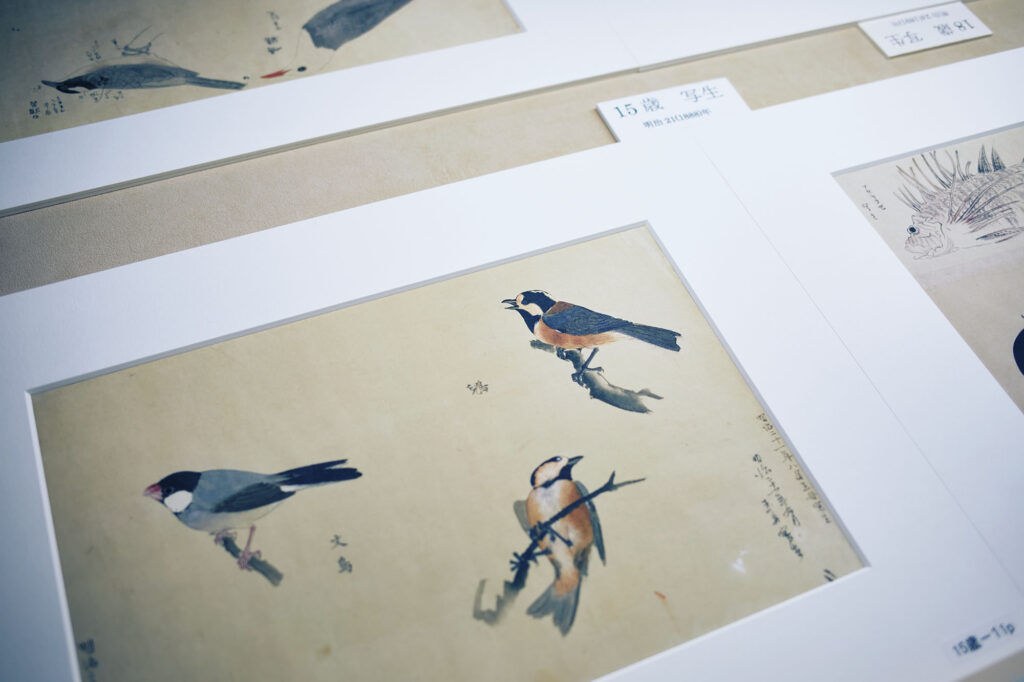
- 川合玉堂写生帖 花鳥編(解説・佐々木直比古、川合三男 グラフィック社 1979)
- 川合玉堂写生帖 山水編(解説・佐々木直比古 グラフィック社 1979)
- 巨匠の日本画 3 川合玉堂-山村余情-(学習研究社 1994)
- アーティストジャパン特集 河合玉堂(デアゴスティーニ・ジャパン 2007)
About Ome
Once home to nearly 800 weavers and dyers, Ome flourished in its rich natural surroundings, cultivating a deep tradition of craftsmanship, sake brewing, and the arts. Much like indigo fabric that deepens with each layer of dye, the town’s cultural heritage has grown ever richer over time. At the heart of this legacy stands Yoshino Baigo, a massive treasured plum blossom grove where each spring, thousands of trees blanket the hillsides in delicate shades of pink and white. This grove was lovingly restored by the local community to symbolize enduring beauty and to renew and revive a spirit that lives on.
こちらの記事は英語で執筆されており、ブラウザの自動翻訳により氏名の漢字表記が正しく表示されないこと、不自然な日本語が表示されることがあるようです。お手数ですが、英語原文での閲覧をお試しください。