

In August 2025, Me Time in Tama marked its first anniversary. The platform was created to share with the world the stories of people whose remarkable endeavors illuminate life in the Tama region. Meeting these individuals has revealed to us just how vast and deeply humane the people of this region truly is. Beyond the beauty of its mountains, rivers, and historic streetscapes, Tama also nurtures urban culture and distinctive personalities. These elements mingle and resonate with each other, creating a way of life that feels, in every sense, “just right.”
One person who embodies this way of life is Chikako Ito, president of Nishi no Kaze, the community newspaper serving the western part of Tama. From the very beginning, Chikako took notice of our Me Time in Tama activities, sometimes encouraging us with candid words, and has become an indispensable guide to understanding life in the region.
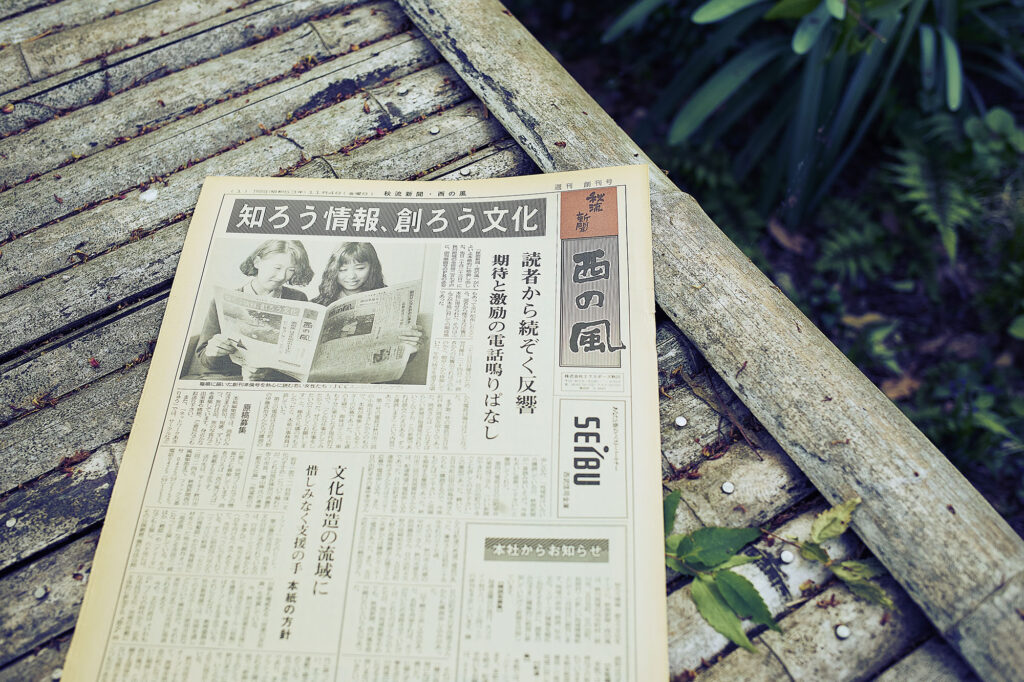
Founded in 1988, Nishi no Kaze covers eight municipalities—Ome, Akiruno, Hamura, Fussa, Mizuho, Hinode, Okutama, and Hinohara—and is published every Thursday. What makes it unique is its origin: citizens pooled their own resources to create a newspaper they believed the community truly needed. The founding spirit of delivering residents’ voices directly through the community newspaper continues to remain at the heart of its pages today.
In an age when a single smartphone grants access to limitless information, newspapers worldwide are disappearing, and Japan is no exception. Why, then, does Nishi no Kaze remain so committed to print? To this, Chikako responds without hesitation: “I continue to make this newspaper as a way to give back to the community.” When she first moved to the area, knowing almost nothing about it, the locals welcomed her warmly and generously shared their knowledge and history. She wants to express her gratitude by continuing to convey the voices and daily lives of the community. That sense of giving back is what drives her commitment to preserving the tangible, interactive medium of print.
Through her dedication to sharing the voices of western Tama residents, Chikako embodies the spirit of “paying it forward,” passing on the kindness she once received. Watching Me Time in Tama showcase the region, she seems to recognize a shared purpose in our work. We sat down with Chikako, the publisher and a fellow resident, to hear her thoughts on living and working in the community, on its connections, and on the enduring power of storytelling.
Everyday Life in Tama: Stories of Living Communities
——What first brought you to Akiruno?
Chikako Ito (CI): My husband had already moved here, while I was still living in Ogikubo. When I visited his home, I found a copy of Nishi no Kaze on the table. As I read through its pages, I felt something inside me soften. “What a peaceful place this must be,” I thought. It was as if the newspaper itself carried the quiet air of the land.
——Did you hesitate about moving?
CI: Not really. As a student, I had volunteered in forestry work in Hinohara and Hinode, so the area was not entirely unknown to me. Around that time, my husband was transitioning into forestry as a new career. Step by step, I prepared myself as well, and when we married, I moved here from Ogikubo. I began working at Nishi no Kaze in 2006—nearly twenty years have passed since then.
——How did you come to join the newspaper?
CI: My husband was a subscriber, and I happened to see an advertisement calling for reporters. I applied and visited the office, where they simply said, “Why don’t you give it a try?” It was less of a formal hire and more like being thrown into the deep end (laughs). No one had time to teach me; I was told to head out without even knowing the locations. With only a paper map in hand—this was before smartphones—I drove around the towns, often getting lost. But the people of the community helped me, offering guidance, stories, and introductions. Gradually, the fragments gathered into articles.
——How did you decide what to cover?
CI: When information was scarce, I relied on casual conversations. Someone might say, “A new shop just opened over there,” or “That kid won a sports competition.” I would follow up, visiting or calling, and the stories would take shape. In those early days, I listened to whatever people shared, then decided if it might be newsworthy. Later I realized that some figures I found fascinating were, in fact, rather marginal—or simply eager for attention. Through these missteps, I began to see the bigger picture of the community. Only then did reporting become truly compelling.
Meeting People, Learning the Community, One Small Dialogue at a Time
——How do you find remarkable people?
CI: By going out and meeting them. Today, anyone can broadcast themselves online, but what matters is the value you discover through real encounters. Not whether they are famous or award-winning, but whether you can genuinely say, “I found this person.” That perspective can only be earned by walking, and by seeing for yourself.
And conversation is essential. In idle chats, people will say, “By the way, someone over there is doing something interesting.” That becomes the seed of another story. This hasn’t changed even now: I still rely on face-to-face encounters, confirming with my own eyes and ears.
——You’ve said you are drawn not to those who win awards, but to those who quietly continue. Why is that?
CI: People who have been committed to something for a long time—that in itself is remarkable, isn’t it? Without a sense of sincerity, nothing can truly last. Take, for example, the greengrocer near my home. He may never be featured in the media, yet the way he conducts his business and maintains his relationship with customers is genuinely admirable. I want to write about people like him—their quiet dedication and the dignity found in everyday life.
——When did you begin to feel that it is people who bring vitality to a town?
CI: I used to work for an agricultural publisher. Traveling across Japan on a motorbike to sell agricultural magazines, I learned firsthand that the key to integrating into a community is identifying its central connector—the “go-to” person in a given field. Since it was door-to-door sales, there were even times I was mistakenly labeled as a suspicious stranger over the town loudspeaker (laughs). In every community, there’s always someone who serves as that point of entry; once you connect with them, it’s often much easier to become part of the local network.
Tama as a Daily Journey: Capturing Community Between Work and Life
——Are there challenges to living in a small community?
CI: Yes, definitely. In the countryside, the smaller population means relationships are naturally closer, for better or worse. There are many ways people can support each other, but at times it can also feel stifling. When I really need a break, I step away from the community for a while.
——What do you prioritize when writing and sharing stories?
CI: I believe there’s little value in writing formulaic or superficial articles. Especially when covering politics or elections, I sometimes face criticism, but I make it a point to report what truly needs to be conveyed. Often, I write while wrestling with my own uncertainties, and readers will even tell me they want more in-depth coverage. Above all, I aim for people to feel that this newspaper brings their own town closer to them, making it tangible and relatable.
——Do you see a line between living in the community and reporting on it?
CI: It feels less like a job and more like one’s life’s work. I gather stories and write articles as naturally as waking up or having breakfast. People often ask me, “Do you take proper breaks?” but for me, the line between work and rest isn’t very clear. Since my workplace and daily life overlap, it feels almost inevitable. Conversations with locals or casual walks often spark new story ideas. That’s the cycle in which I live.
——Lastly, what do you love most about this community?
CI: I love that there are so many people here whose spirits overflow the usual bounds. In the city, people often seem proper and restrained, but around here, many are unpretentious. There’s an atmosphere where you can show your true self, and in that sense, it feels freer than the city.
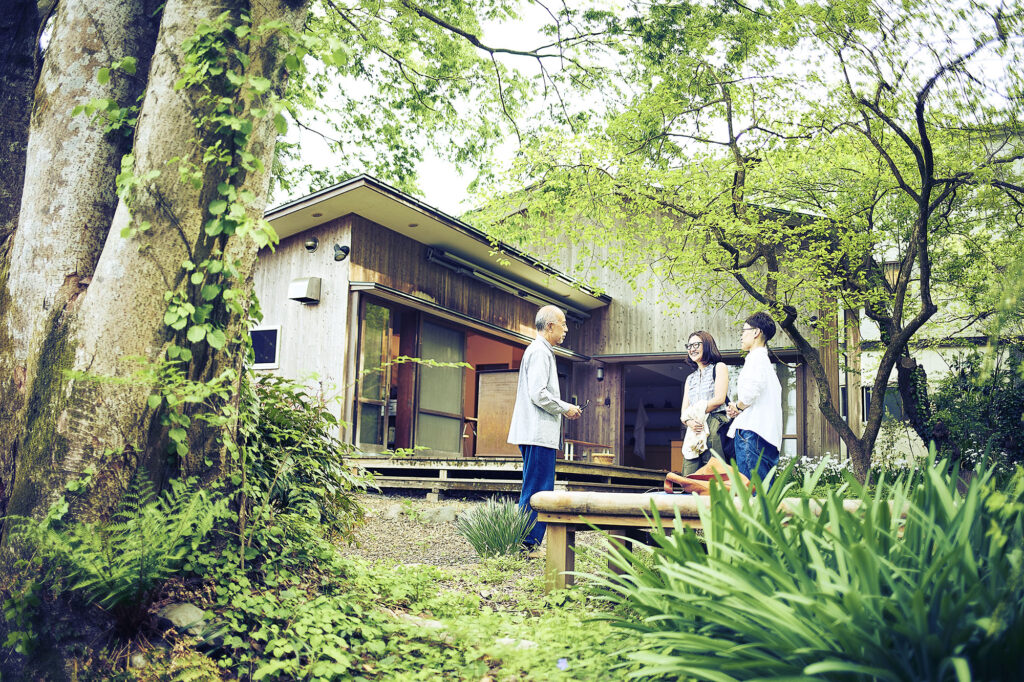
Chikako’s words show that a local newspaper can serve as an integral link between people and its community. In the same spirit, Me Time will continue its work as a bridge, connecting the people of Tama with the wider world and sharing their voices and warmth—because we believe the stories of those living in the community can resonate with anyone, anywhere.
Chikako Ito, President of Nishi no Kaze Newspaper Co.
Moved to Akiruno in 2006 and began reporting on local life for the community newspaper Nishi no Kaze. Became editor-in-chief in September 2020 and president in 2021. She emphasizes dialogue with residents, values print media while embracing new cultural and social connections, and writes from a community-rooted perspective on politics and social issues.
About Akiruno
Akiruno is located in the western part of Tokyo. The eastern part of Akiruno is a plain surrounded by gentle hills, while the western part features mountainous areas that are part of Okutama. The area once thrived on forestry and silk spinning, and the remnants of those days are shown in the old kominka that are still in existence, a testament to the history and culture of those times. The rich natural environment, exemplified by the Akikawa Valley, attracts enthusiasts of fishing, camping, hiking, and trail running. It is known as a place where the convenience of urban life can be combined with the pleasures of rural living.
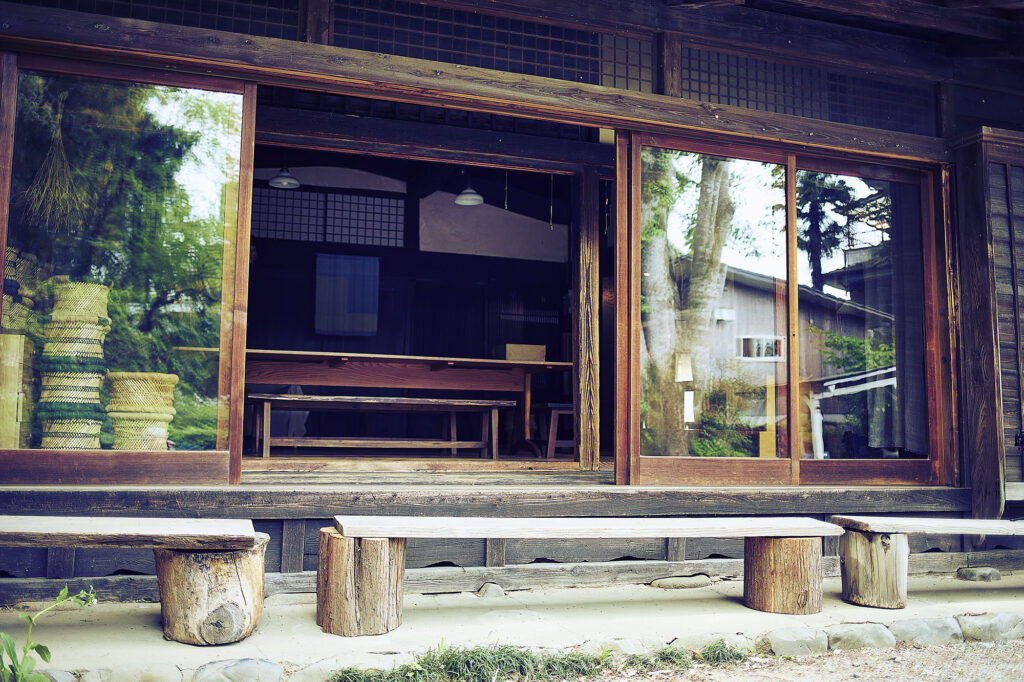
Special thanks to MAKI TEXTILE STUDIO for the location.
こちらの記事は英語で執筆されており、ブラウザの自動翻訳により名前の漢字表記が正しく表示されないこと、不自然な日本語が表示されることがあるようです。お手数ですが、英語原文での閲覧をお試しください。